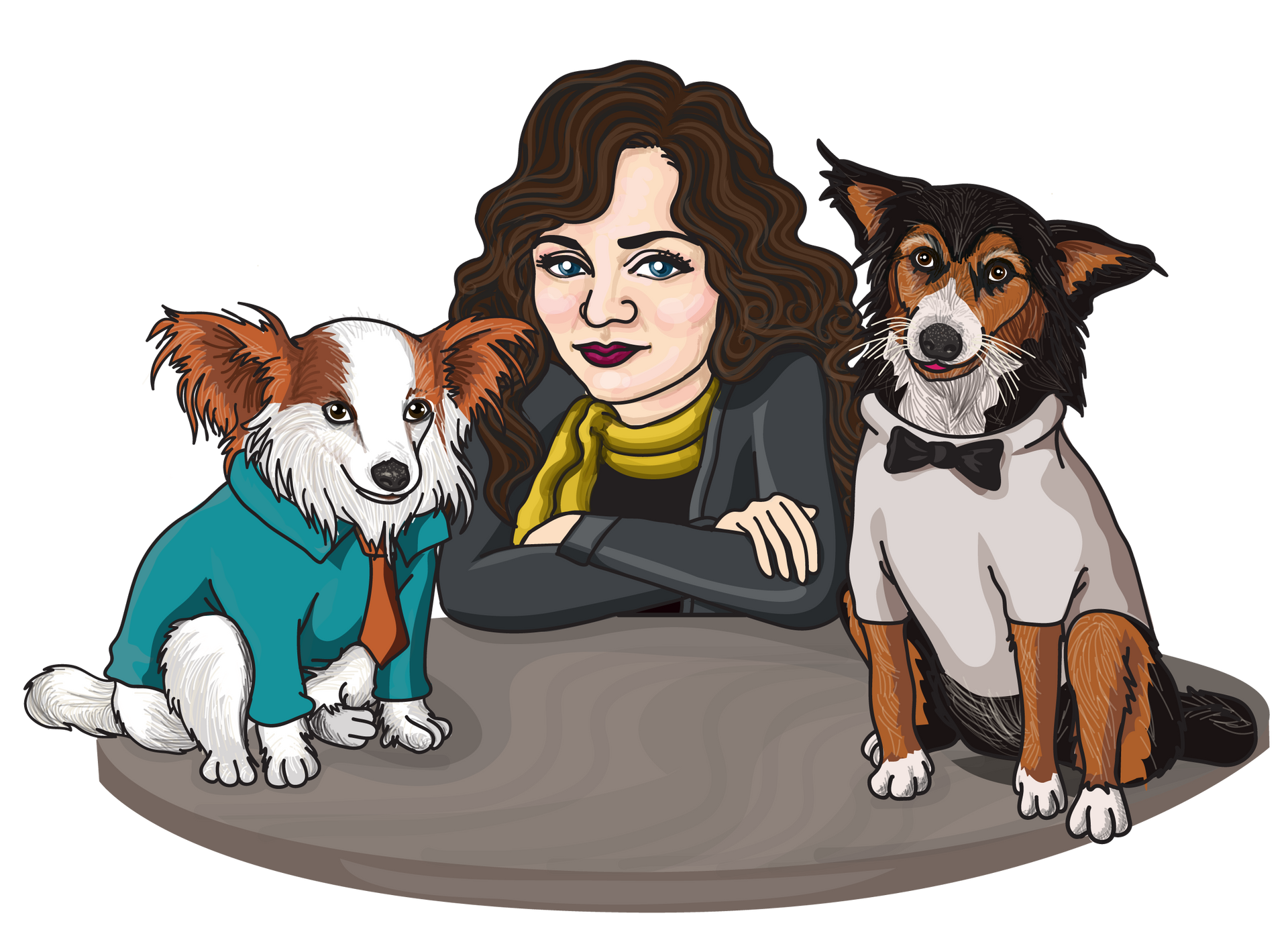
This Was My Deeply Beloved Harry . . . Who Was A Completely Normal Little Dog Just 15 Hours Earlier When I Arrived At Massey's 'Companion Animal Hospital' With Him for A Straightforward Rehydration Procedure. Just 15 Hours Earlier, He Had Been Standing Up In His ICU Cage Crying for the Comfort Massey ICU Attendants Refused to Give Him . . . and Medically, Needing Nothing More Than the Urgent Rehydration He'd Been Admitted for . . . and That They Charged Me For But Didn't Give Him . . . Drugging Him (CATASTROPHICALLY) Instead, for A Student Filmfest . . . Which Was Easier for Them and More Profitable for the University.
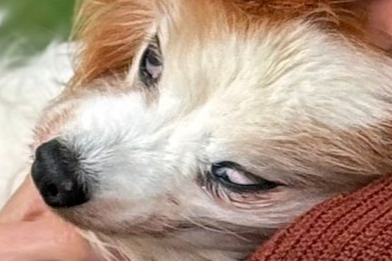
This Is What Non-Accountability Looks Like . . . the Handiwork of New Zealand Massey University's ICU 'Nurses', Students, 'Teaching' Staff, and 'veterinarians' Stephanie Rigg and 'Dr' Steffi Jalava . . . Catastrophic, Repeat Drugging for Usage in Student Activities and Filming . . . and So - When 'Finished With' - Harry Could Then Be Deviously Presented to Me As Having Suffered from A Fabricated Sudden 'Neurological Decline' and Requiring Immediate 'Euthanasia'.
Note to international readers: This article references New Zealand's veterinary regulatory framework. However, the accountability gaps described here are not unique to New Zealand. The unregulated status of veterinary nursing, the diffuse supervision chains in teaching hospitals, and the closed-door (or, in Massey's case, non-existent) complaints processes that protect institutions over patients are features of veterinary systems in many countries. Check the regulatory framework in your own jurisdiction - you might find it closer to what's described here than you'd expect.
Here's something the veterinary industry doesn't want you to know. And something New Zealand's Massey University and its "Companion Animal 'Hospital'" and its management, "Dean" Jon Huxley and Practice Manager, Pauline Nijman, most certainly don't want its private fee-paying clients to know.
When you leave your pet at a veterinary teaching hospital - or any veterinary practice, for that matter — you assume the people handling him or her are qualified, registered, and individually accountable for what they do to it.
They're not. At least, not all of them. And in some cases, not any of them.
Don't believe me? Ask Google yourself . . . Here's what it says about New Zealand, specifically:
"New Zealand has no legal regulation of veterinary nurses or other allied veterinary professions.
"Professional titles for veterinary nurses/technicians and allied animal healthcare practitioners are not protected by law in New Zealand.
"You can legally work in a veterinary practice in New Zealand without a formal qualification."
To be clear - qualifications exist, and some practices prefer or require them.
But here's the point: none of it is required by law. The title is not protected. The register is voluntary. Anyone can call themselves a veterinary nurse. And if something goes wrong, there is no statutory body with the power to hold an unqualified or unregistered veterinary nurse individually accountable for what they did to your animal.
They could have been a cleaner or a receptionist the week before. And in the case of these bitches who slammed my precious little dog with repeated catastrophic doses of a convenience sedative - that their own recent records show he had previously suffered profound adverse reactions to (there at Massey itself) and that, additionally, is firmly contraindicated for the very kidney condition the blood tests they had that very night performed on him and could clearly see he had - there is no way I can believe they had qualifications. Or, if they did, Massey should be investigated for giving them to them.
Which, by the way, Massey is. Massey's Companion Animal Hospital is currently under active investigation by the Ministry of Primary Industries' Animal Welfare Investigations Unit. And reader feedback conveyed to me indicates it's been a long time coming. I've conveyed that feedback to the MPI investigation team, too.
Where Cruelty Starts . . . and Doesn't Stop
On the night of November 30, 2025, I walked into Massey University's Companion Animal Hospital ICU and found staff huddled in jovial social conversation, completely ignoring a screaming, blind, senior dog in crisis — my dog, Harry.
He was not only in emotional crisis and desperate need of human comfort - he was blind, acutely dehydrated following a short burst of very hot temperatures and our temporary accommodation crisis related to an insurance disaster - but he was also standing up strongly on his little back legs with his front legs stretched out fully through the grid of the cage door . . . and at any moment, being blind, if he'd have come down sideways from his standing position, he would have snapped his legs in the grid.
And they didn't give a shit. I was almost in tears of uber-frustration trying to get a completely impotent, deer-in-the-headlights, couldn't-wait-to-get-me-out-of-there-so-her-shift-could-finish Stephanie Rigg (whose name, fascinatingly, appeared on a pre-populated "euthanasia consent" form forced on me the next day, after a two-hour coercion session by her "colleague" "Dr" Steffi Jalava . . . whose dastardly deeds that next day you can read about here.
May she rot in the richly deserved state of hell herself, that she intentionally and wilfully induced Harry into before pulling off her "he's had a neurological" event and "needs to be euthanased TODAY" stunt . . . on confused, sleep-deprived me (as it was clear on the intake notes that I had declared myself as being) and that she finally achieved after emotionally blackmailing me (with what has now been proven to have been utter bullshit) for two long and intense hours (between a coercive, lengthy phone call she made to me earlier in the day and that she has conveniently written out of her 'Clinical Summary' but that phone records will clearly show she made, and an intensive "consulting room" session that I have requested but that Massey refuses to release their footage of).
But I digress, with apology to my readers . . . as this article isn't meant so much to be about Harry as it is a warning to you for the sake of your own beloved pets. Except that, clearly, the two topics are inseparable.
Yes, I'm still furiously angry (and I always will be) about what was done to Harry, and by extension, to me - and about the fact that, if not for this gaggle of psychopathic, unaccountable bitches and their supposed "management" and "teaching supervisors" (and you can see clearly exactly what students are being "taught"), I would still have Harry beside me, here at home, right now. And yes, I'm furious about the intense suffering and cruelty they put him through (some of which can be seen clearly in certain images I've been able to extract, although most I haven't) from Massey under legal provisions, indicating there was a degree of real enjoyment by staff and students in the cruelty they inflicted upon him.
Proof Positive: As Always, I Come with Full Receipts
And before I move onto answering the question any loving pet owner will be left answering (How can I protect my pet, proactively, if he or she ever ends up in an ICU, especially Massey's?), let me press home two further facts. One a point of evidence that Massey's management has full understanding of what has been going on behind its closed doors all this while, and the other, absolute proof that, the complete non-accountability stretches from the cleaner-turned-"vet-nurse" scenario right through to the highest levels of the actually qualified:
Firstly, if Massey's management had nothing to hide, they wouldn't scrub and falsify hospital records. Because that's a crime with serious ramifications under a variety of different sections under the Crimes Act 1961 . . . but, in Harry's case, they did it anyway. And now they have a police filing as a result . . . with "Dr" Steffi Jalava's name attached . . . albeit, in reality, the gutless upper management who were no doubt also involved and/or directed it, should have their names attached to that police filing as well. And they will. Give me time and the benefit of my ongoing deep-dive investigative work. That they once thought I was just bluffing about. But don't think any more.
Secondly, the rigged system that is the Veterinary Council of New Zealand's "complaints process" has been its best-kept secret for years. And the collusive relationship between Massey and the Veterinary Council has been even more well-hidden.
How the 'Accountability' (or Rather, the 'Non-Accountability') Game Works
But in the meantime, here's what pet owners need to know about how the accountability - or, rather, non-accountability - game works:
Something goes wrong with your pet. You complain. The institution points you to the Veterinary Council of New Zealand.
Perhaps, as in my specific case, even threatens you with legal proceedings if you dare speak outside of those closely-managed channels.
And that has continued not to go well for him ever since - with The Killing of Harry Kelly expose series now extending well past the shores of New Zealand and reaching all corners of the globe (and into places I never even knew existed), and with the campaign now having given rise to the establishment of the International Institute for Improvement in Veterinary Ethics (IIIVE.org). All outcomes for which I've been called a range of names by courageous anonymous emailers (who appear to very clearly be) affected Massey insiders, of the intellectual ilk of "Hugh Janus". (Bring it on. You are serving to provide graphic warning to my readers as to the level of ethics, compassion, and intelligence possessed by those who are handling their pets behind closed doors at Massey's "Companion Animal Hospital" - from the lowest rungs of the ladder to the "highest" . . . and above.)
But back to the system.
The Veterinary Council of New Zealand, very conveniently for the sector, deals only with registered veterinarians — it has no jurisdiction over veterinary nurses, students, technicians, or any other staff. (And, by the way, the Veterinary Council's "uphold rate" for complaints across the past 24 years, has been 1.5 percent . . . that's one point five percent . . . and that's only of those pet owners who thought it was worth the frustration of trying to complain. And, it's worth additionally noting that Jenny Weston, Massey's Academic Program Director of the BVSc program, is ex officio member of the very Veterinary Council of New Zealand committee that reviews all complaints assessment decisions — including, potentially, yours.
So if the person who actually harmed your pet wasn't a registered vet, you can't even go there . . . for whatever it might have been worth going there for at all. And if the registered vet who was nominally "supervising" (example being the young intaking whatever-her-qualification-might-have-been, Stephanie Rigg on the night of Harry's sadly and totally unnecessarily fatal admission) can credibly claim they weren't directly involved in the specific act that caused harm — well. Good luck proving otherwise.
Side Announcement: Don't give them all the benefit of this cunningly-engineered non-accountability system. If your pet has been hurt, or if you have been severely wronged, by anyone at or associated with a veterinary practice, whatsoever, including "after care" cremation companies and the like, by the way, whose industry, and its "ethics" are set up to be equally unaccountable . . . please use the easy contact mechanisms at the International Institute for Improvement in Veterinary Ethics (IIIVE.org) website.
How Massey Gets Away with (What, In A Human Hospital Would Actually Be) Outright Murder
At a teaching hospital, add another layer.
Students aren't registered. Interns might or might not be fully registered.
At Massey, the chain of supervision on the night Harry was admitted was so diffuse that the clinician on duty — who I later established was almost certainly still an intern — either had no, or was too scared by the Hospital's culture to exercise any, authority over the ICU nurses who were ignoring a patient in distress.
So . . . on Massey's heavily-redacted records (with a black box over every single name and role), "nobody" specifically decided to sedate Harry into near-comatose collapse. "Nobody" specifically disconnected his IV fluids eight and a half hours into a prescribed 24-hour protocol (which even in its own right had been highly inadequate and clearly prescribed by someone with no specific or detailed knowledge of rehydration requirements). "Nobody" specifically filmed him in that state for multiple student training videos, in direct contravention of my repeated written and verbal instructions.
It was a team effort - and that "team" remains comprised of totally unnamed players.
When I stood in that ICU watching my precious little blind dog scream in terror with his legs outstretched through the steel grid of his cage door, the person nominally in charge told me, impotently (and at a volume that ensured the two cackling ICU "nurses" wouldn't hear her, such appeared to be her fear of them): "I can assure you everyone here loves animals" . . . while the distinct evidence to the direct contrary was right beside me.
Six months later, not one of those people has (YET) been named, charged, or held accountable by any regulatory body.
A Protection Racket With A Letterhead & Funding It Shouldn't Have
Now here's the part that applies to every pet owner who does know the name of the vet involved and lodges a formal complaint.
You lodge it. You name the vet. And then the process disappears behind closed doors. The assessment panel is not disclosed to you. The outcome — if there is one — is typically a private reprimand that the public never sees. You are not told what was decided or why. And across 24 years, VCNZ upheld just 1.5% of complaints.
That's not a regulatory body. That's a protection racket with a letterhead and funding it shouldn't have.
Massey University has gone one further. By redacting every single name from every document provided under Privacy Act and OIA obligations, they have made it impossible for me to even get to the starting line of the normal complaints process.
You can't lodge a Veterinary Council complaint against a person whose name you don't know. Massey knows that. That's why the black boxes exist.
Six months of Privacy Act-obligated information-release requests. Six months of redacted names. Six months of black boxes over every individual who had any involvement with Harry's admission, his treatment, his filming, and his death.
Despite all accepted international veterinary profession protocols and standards, Massey's OIA response received this week advised that Massey intends to release staff names only to the Veterinary Council (Readers: The expose on that specific issue is coming very shortly.) Being pressed from all directions now, and probably knowing those names are going to be compelled by an external source sooner or later, they have finally said the names will be released.
Except not in reality. Because they're only going to be released to their mates over at the collusive Veterinary Council. Released to the closed-circuit with jurisdiction over registered vets only — rather than released to Harry's owner, who is entitled to know the identity of every person who handled her property without authorisation . . . as clearly declared by Senior Standards and Advice Officer & Solicitor at the Royal College of Veterinary Surgeons (UK) Ky Richardson, with whom I confirmed standard international practices on identity disclosure.
Not that the average pet owner would want to know the names and roles of personnel handling their precious pets anyway, and for which they're usually paying astronomical fees, of course.
And . . . Back to the Second, Back-Up Accountability Trap Door
Meanwhile, any staff member who isn't a registered vet disappears entirely from the accountability architecture.
No register. No complaints body. No individual liability. Just an employer with every incentive to keep their name out of the public record.
Here's what all this means for you.
The next time you leave your pet at a veterinary teaching hospital — or any overnight veterinary facility —
remember this:
You have no way of knowing who will handle your animal during the hours you're not there. You have no way of knowing their qualifications, their registration status, or their individual accountability if something goes wrong.
You have no way of knowing whether they were the cleaner last week. Or maybe still are.
Your local vet is not going to tell you this.
The teaching hospital is most certainly not going to tell you this.
And the Veterinary Council of New Zealand is not going to tell you this.
So I am.
Before you leave any veterinary consultation — every single time, no exceptions — insist on being given a print-out of, and check the detail of, the clinical record for that visit.
Make sure the name, position and role of every person who made a decision for your pet, carried it out, or handled your pet in any way, is recorded in there. Every time. Before you walk out the door.
Actually, given the self-interested practice of presumptuously handing you the EFTPOS terminal when you approach the counter after a consultation, with the total (often into the high hundreds and even thousands of dollars) already entered and a flippant "Do you need the invoice emailed to you?", to which you're meant to respond, "No, it's OK, don't worry about it" . . . GET AND CHECK THE RECORDS FIRST. READ THE RECORDS FOR THAT CONSULTATION. THEN, AND ONLY THEN, IF EVERYTHING LINES UP, PAY.
That's how it works in any other service provision industry, and that's how it should be working in this one, too.
LOOK WHAT HAPPENED (READ ABOUT IT HERE) WHEN I DIDN'T. They make you feel like a heel, untrusting, holding up the queue.
And because I fell for the clinical attire and the "stethoscope hung around the neck" authority/"expert" image.
Because I trusted the very last people that I should have ever trusted with the most precious thing I owned. And I use "owned" very deliberately. Because Massey doesn't see it that way. They think THEY own your pet and can do what they want with "it". And, unfortunately, unbeknownst to you, they DO.
And one last critical point of warning - make sure you read this article - and that, if a vet or a staff member of a veterinary practice is the one pointing you towards euthanasia of your pet, and it's not your idea and especially if it comes out of the blue - ALWAYS, ALWAYS, ALWAYS, SEEK A SECOND, FULLY INDEPENDENT, OPINION. That's a right you have and an obligation they have. Just like the many, many others Jalava and her "colleagues" breached. (Very, very serious breaches that I alerted the Veterinary Council senior leadership team to way back as early as January 7, just a month after Harry's demise, as I was beginning to piece together the truly horrific truth and its multiple horrifying components . . . and that the Council's CEO Iain McLachlan has not only done nothing to indicate his concern over, he's worked actively to protect Massey and its staff from any accountability - and, as a result, has now found himself the subject of an active Law Society of New Zealand investigation.)
If "Dr" Steffi Jalava had not engineered the logistics of that fateful day (pummeling me with her "this has to be done today, and before I leave" strategically fabricated urgency) and prevented me from being able to leave Massey with Harry and seek an independent external assessment of Harry's presentation . . . any vet I'd been able to leave there and take him to see in that condition, would have immediately seen what I didn't - as a non-vet and in a heavily stressed and sleep-deprived state:
That the reality was, Harry was catastrophically overdosed with sedatives and other potentiating substances.
A little dog who - just 15 hours earlier - had performed the complex moves and fine motor co-ordination of standing up on his hind legs, and even while blind and in a foreign, caged environment, outstretched his front legs through the tight grid squares of an ICU cage . . . and directed his cries straight at me, despite his blindness, as I walked through those ICU doors . . . that was NOT a "brain failing" animal.
What he was (when the ICU "nurses" and Rigg, Jalava, "teaching" staff and co. - almost certainly with the blessing of Practice Manager, Pauline Nijman, to whom I had already, for some time, been a thorn in the side for my flagging to her of the woeful standards of her "ICU" staff, finished drugging him and using him for astoundingly cruel student "teaching" purposes and film productions) was a piece of inconvenient evidence that they were NOT going to let me leave with, alive.
And they didn't. (And in my view, they were glad to see the back of me, and if they did what they did to Harry, and derived the multiple benefits from it - including financial fraud (and the many components thereof) and student training activities and productions - that they did, that was a real bonus for them. And they did. And it was. Until now. (Now . . . not so much. They should have done the background check of me that their high-profile lawyers have been doing ever since . . . and found that I'm a tenacious investigative journalist bent on accountability of publicly-funded institutions.)
In closing, my final two recommendations are this:
NEVER allow yourself to be in a situation like I was taken full advantage of having been in i.e. where you are totally alone and are placed under intense pressure to make an irreversible decision.
NOTE TO READERS: You may also be interested in reading those articles relating to Harry's case that are specifically germaine to educational and ethics topics, over at the
International Institute for Improvement in Veterinary Ethics (IIIVE.org)
and the specific
Harry Kelly Case Study section there.
Other News, Reviews & Commentary